
- By hassamullah000@gmail.com
- August 3, 2026
Website speed is no longer just a technical factor—it has become one of the most important elements of digital success. Whether you run a small business website, an e-commerce store, or a corporate platform, the speed of your website directly affects how users interact with your content and how search engines evaluate your site.
Visitors are irritated by a slow loading website, resulting in higher bounce rates and fewer sales opportunities. On the flip side, a speedy website enhances user experience, aids in higher search engine rankings, and motivates visitors to stay longer and act. For businesses looking to grow online, website performance should be treated as a core business priority rather than an afterthought.
Why Website Speed Matters
Today’s Internet users expect Web sites to load almost instantly. Many visitors leave a page if it takes too long to load, before they see your products or services. This type of behavior not only impacts customer satisfaction but also sends negative engagement signals that can impact search performance.
A fast website is easier to navigate between pages, read content and take actions like filling out contact forms or making purchases, leading to a smoother experience for users. If a website is quick to respond, the initial impression tends to be good.
Website Speed and SEO
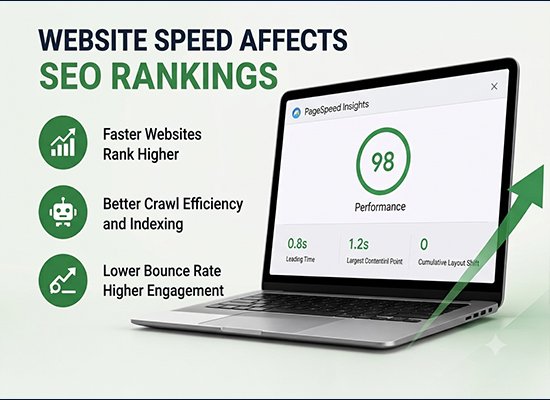
Search engines are designed to provide the best possible experience to the user. Because of this, website speed is one of the factors considered when evaluating page quality and overall user experience.
A fast-loading website can contribute to:
- Better user engagement
- Lower bounce rates
- Improved crawl efficiency
- Faster indexing of new pages
- Better mobile performance
- Increased visibility in search results
While website speed alone will not guarantee top rankings, it supports a strong SEO strategy when combined with high-quality content, technical optimization, and relevant backlinks.
Core Web Vitals and Performance
Google introduced Core Web Vitals to quantify user experience of a webpage. These performance metrics measure loading speed, visual stability, and responsiveness.
The three primary Core Web Vitals include:
- Largest Contentful Paint (LCP): Measures how quickly the main content loads.
- Interaction to Next Paint (INP): Measures how responsive a page feels when users interact with it.
- Cumulative Layout Shift (CLS): Measures visual stability while the page loads.
Improving these metrics creates a smoother experience for visitors while supporting technical SEO efforts.
User Experience Drives Better Results
Website speed directly affects user experience. Users are more likely to trust and engage with websites that look responsive and easy to navigate.
A fast website allows users to:
- Find information quickly
- Browse products without delays
- Navigate between pages smoothly
- Complete purchases with fewer interruptions
- Contact your business more easily
Better user experiences often lead to longer session durations, increased page views, and stronger customer satisfaction.
Faster Websites Improve Conversion Rates
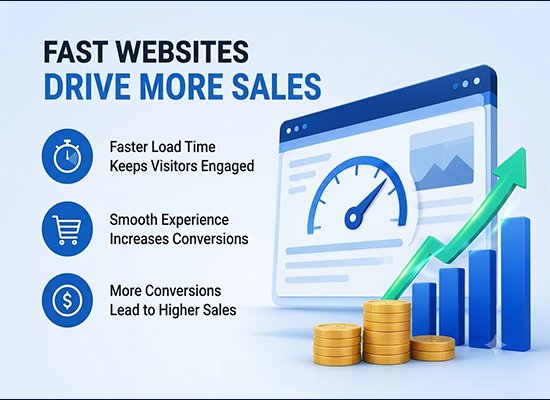
Every second matters when users are making purchasing decisions. If a page takes too long to load, it can disrupt the customer journey, and reduce the chances of them converting.
Fast websites often experience:
- Higher lead generation
- Better online sales
- Increased contact form submissions
- Improved booking rates
- More completed purchases
When visitors can access information quickly, they are more likely to continue through the buying process instead of leaving for a competitor.
Mobile Speed Is More Important Than Ever
Now, a lot of website traffic comes from smartphones and tablets. Mobile users often browse in different network conditions, thereby making the website optimization even more critical.
A mobile-friendly and fast-loading website helps:
- Improve mobile search visibility
- Reduce bounce rates
- Increase user engagement
- Deliver better browsing experiences
- Support local and global SEO efforts
Businesses that optimize for mobile performance are better positioned to reach today’s digital audience.
Common Causes of Slow Websites
Many websites become slow because of avoidable technical issues.
Some of the most common causes include:
- Large, uncompressed images
- Poor-quality web hosting
- Too many plugins or scripts
- Unoptimized CSS and JavaScript files
- Excessive redirects
- Slow server response times
- Missing browser caching
- Unoptimized databases
Identifying and resolving these issues can significantly improve overall website performance.
How to Improve Website Speed
Improving website speed requires a combination of technical optimization and ongoing maintenance.
Some effective optimization practices include:
- Compress and optimize images
- Enable browser caching
- Minify CSS and JavaScript
- Use a reliable hosting provider
- Implement a Content Delivery Network (CDN)
- Reduce unnecessary plugins
- Optimize database performance
- Enable Gzip or Brotli compression
- Use lazy loading for images
- Regularly monitor website performance
Continuous monitoring ensures your website maintains optimal performance as new content and features are added.
The Business Benefits of a Fast Website
Investing in website speed delivers long-term business advantages beyond SEO.
Some key benefits include:
- Higher search engine visibility
- Better customer experience
- Increased user trust
- Improved lead generation
- Higher conversion rates
- Greater customer retention
- Reduced bounce rates
- Better return on marketing investment
- Stronger brand reputation
A fast website creates a foundation for successful digital marketing, making every visitor interaction more effective.
Why Website Speed Supports Long-Term Growth
Businesses spend a lot of time and money on advertising, SEO and content marketing just to get visitors. But if the website itself is a poor performer, much of that investment can be flushed away.
A high performing website allows visitors to find information quickly, browse services and complete key tasks. As the online competition is getting hotter, speed is turning out to be a critical factor in delivering superior digital experiences and staying ahead of the competition.
A website that has a combination of fast performance, quality content, and effective SEO is a website that attracts visitors and converts them into loyal customers.
Final Thoughts
Website speed is no longer a luxury, it’s a requirement for online success. A fast website delivers real value at every stage of the customer journey, from improving SEO performance and enhancing user experience to increasing conversions and driving business growth.
Performance-oriented companies compete better in search results, keep visitors coming back and get the most out of their digital marketing efforts. When you monitor performance consistently and implement optimization best practices, you can create a website that meets users’ expectations and supports long-term growth.

 Frequently Asked Questions