
- August 28, 2026
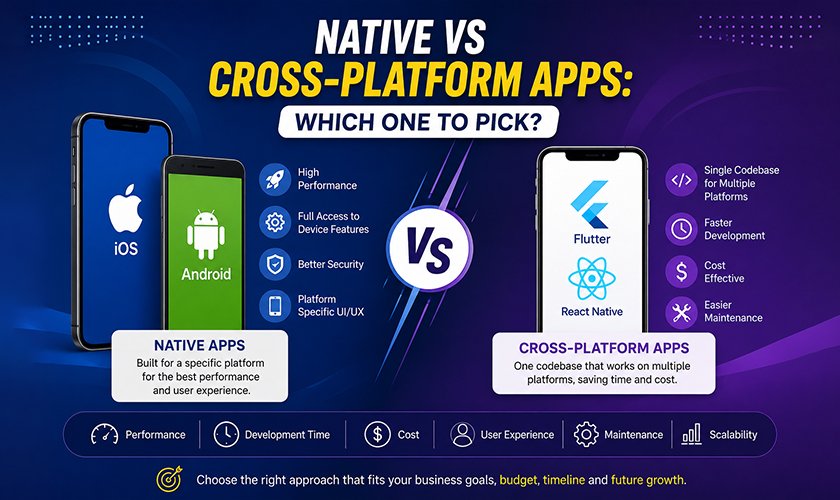
Choosing the best approach in mobile app development can greatly impact your app’s performance, development cost, user experience, and also its long-term growth. Today businesses that are developing mobile apps for iOS and Android usually choose from native app development or cross-platform app development options.
Both of these options have their pros, but which is best for you depends on your business aims, target audience, budget, features, and what you see in your future. We put out there the difference between native vs cross-platform app development, which we hope will better inform your decision pre-launch of your next mobile application.
What Is Native App Development?
Native app development is a process in which you design an app for a particular operating system. For instance, we see that iOS apps are usually created with Swift or Objective-C, and for Android we see they use Kotlin or Java.
In that native apps do what they do best is that they are tailored for their platform, which in turn allows developers to use device features, operating system capabilities, and platform-specific tools to the fullest.
Native apps are the choice for performance-intensive tasks. They offer seamless animation, quick response times, reliable performance, and also better access to features like cameras, GPS, Bluetooth, biometric auth, and advanced graphics.
Also, which goes for companies that want to develop for both iOS and Android; they have to do separate developments. This increases development time, maintenance, and also overall mobile app development cost.
What Is Cross-Platform App Development?
Cross-platform app development is when developers create apps that function on many operating systems with a shared codebase. Technologies like Flutter, React Native, and others, which are present in the modern stack, are very popular.
Instead in developing full separate codebases for iOS and Android, companies can put to use large sections of the same code for both. Also this, which in turn speeds up development time and also simplifies the process of maintenance.
Cross-platform applications are especially useful for startups and businesses that want to roll out on many platforms at the same time with the help of limited development resources.
Although today’s cross-platform frameworks perform well, some large-scale applications still see value in native development, which is required for very specific platform features or heavy-duty processing.
Native vs Cross-Platform: Main Differences
Native and cross-platform development differ in which applications are built out and maintained. Understanding these native vs cross-platform differences can help businesses choose the right mobile app development approach.
Performance: Native apps in most cases perform very well as they are tailored to a certain OS. Cross-platform frameworks have come a long way and do a great job for the majority of business apps.
Development Time: Cross-platform development may see an increase in speed as it allows for code reuse, which in turn reduces development time. Also in native development we usually see separate projects for iOS and Android.
Cost: Building out two native apps can be very resource intensive. In cross-platform development you may see reduced costs as a large part of the code base is reusable. This is one of the main reasons businesses consider cross-platform app development for their mobile applications.
User Experience: Native apps put out very platform-specific experiences. Cross-platform apps do also offer polished interfaces, but some advanced interactions may require you to do additional platform-specific work.
Maintenance: Maintain one codebase, which is what makes cross-platform applications easy to update. For native apps we may have to do separate updates and testing for each platform.
At What Point Do You Pick Native App Development?
Native development is the way to go if you require the best performance out of your app, advanced hardware integration, or a very custom user experience.
For instance, in high-end gaming, augmented reality, advanced graphics, complex animations, or intensive device functions areas, we see native technologies do well.
Native development is right for you if your main audience is on one platform. If most of your customers use iOS, we may see benefit in a native iOS app.
In the case of large scale products which have in depth platform specific features businesses may also see value in native development which in turn gives them greater control of the application environment.
When Should You Choose Cross-Platform Development?
Cross platform development is a great option for reaching out to both Android and iOS users. For businesses comparing native vs cross-platform app development, this approach can be useful when reaching both platforms is a priority.
It’s best for startups, small businesses, MVPs, eCommerce apps, business applications, social media platforms, and also very much so for service based apps. A shared code base will have companies go to market faster and at the same time reduce development and maintenance effort.
If your application doesn’t require heavy use of platform specific features, cross platform development may be the balanced solution in terms of performance, cost and development time.
In the world of professional mobile app development for businesses it is of the essence that which technology you choose is based out of the app’s requirements which in turn is more reliable than to choose the latest framework.
Cost and Scalability Considerations
Budget is a major consideration when it comes to native and cross platform apps. In native development we see higher initial outlay for sure as separate apps are required for each platform. Cross platform development in turn may see better value for money due to re use of code.
Also the cheap options don’t always be the best businesses should look at long term maintenance, scalability, feature sets, performance expectations and future updates when considering app development cost.
A professional development team will assess your needs and put forth a solution which supports present goals and growth.
Native vs Cross-Platform: What’s Best?
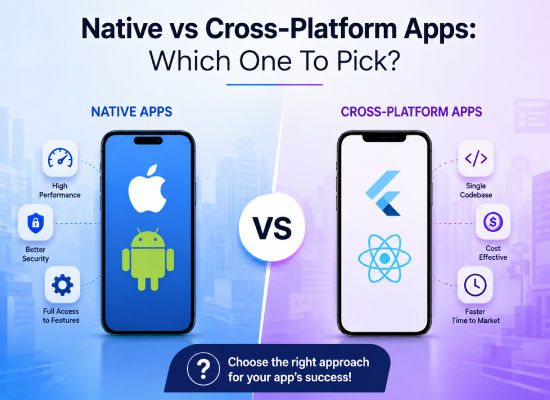
There is no one size fits all in native vs cross platform app development. Native apps do best when it comes to performance, advanced features, and platform specific experiences.
Cross-platform apps are for you if you value speed, cost efficiency, and wide-scale platform availability.
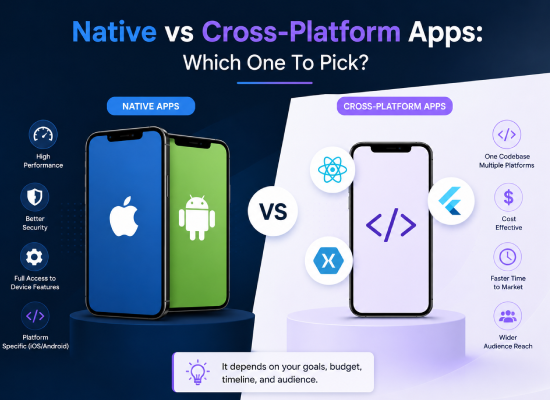
The which is the best approach is very much dependent on your project. Before making a decision, look at your target audience, which features are a must have, the budget you have to work with, the development time frame, the performance you expect, and also the large-scale picture of where this is going.
A technology strategy that is thought out in advance will help you to avoid unnecessary development costs, and we will also see that which mobile applications you put out are more reliable for your target devices.

 Frequently Asked Questions