
- August 28, 2026
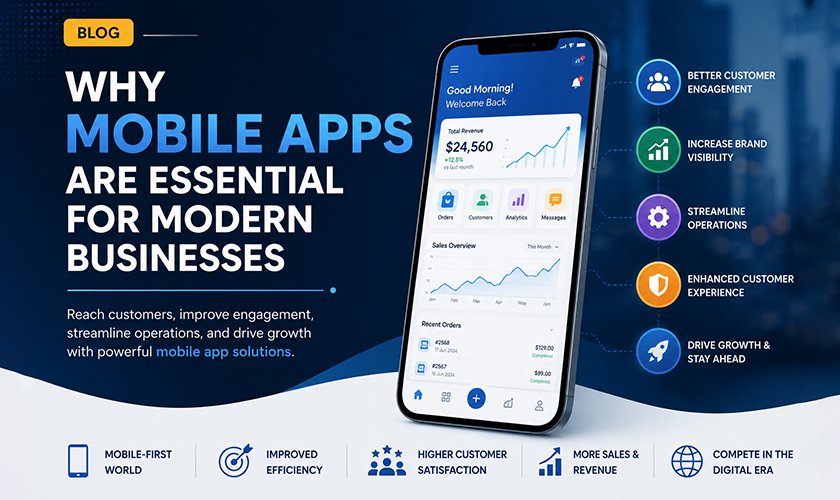
Mobile technology has transformed the way customers find out about brands, get in touch with companies, and make purchase decisions. For today’s companies a mobile presence is a must. What we see are great mobile apps that connect with users, that simplify routine tasks, and that fuel growth. As smartphone use grows in all sectors, we see businesses investing in mobile app development to bring to market faster, more convenient, and more personal digital experiences.
Direct Customer Interface
A mobile app is a platform that businesses have in which to talk to their audience. Also, unlike websites and apps, which are installed on a customer’s phone and also always accessible. Also, businesses can use push notifications in which to put out news, promotions, reminders, and related info.
This connection also improves customer engagement, and we see that when an app has useful features, customers are more likely to return.
Improve Customer Experience
Customers expect a no-fuss digital experience. We can design a mobile app around what our customers need, which in turn makes common actions easier. If they are to place an order, book an appointment, track a delivery, manage an account, or get in touch with support, what we have developed does the heavy lifting for them.
Custom-built mobile applications also present the opportunity to give each user what they want based on their preferences and behavior, which in turn can make a business stand out in a very competitive market.
Greater Brand Presence
Every single time a customer’s eye falls on our app icon that is displayed on their phone screen, we get a chance to put out the brand’s message, and at the same time, we maintain a continuous line of communication with the audience.
A professional app can present a company’s visual identity through its design, color scheme, typeface, and user experience. Through effective branding a mobile app may become a key element of a company’s digital presence.
Increased Customer Loyalty
Customer loyalty is a result of convenience and value. We see that mobile apps are a tool that businesses use to run loyalty programs, to present exclusive deals, to give out rewards, and to put out personal recommendations.
For instance, a retail company may present customers with a point system for purchases, which they can in turn use within the app. Also, a service provider may put in place a convenient appointment schedule and reminder system.
Improved Operational Performance
Mobile apps are a great tool for our customers and in the day-to-day functions of our business. We see value in developing apps for our employees, sales teams, delivery staff, field workers, and managers.
A business mobile app is a tool that teams use to access info, update records, manage tasks, communicate, and monitor activities. By which we also see that these apps reduce manual processes and improve access to real-time info, which in turn saves time.
Personalized Marketing Opportunities
Traditional marketing goes to large audiences at a time; on the other hand, mobile apps allow for very targeted communication. Businesses may use customer preferences, purchase history, and in-app actions to put forth more relevant offers.
For example, an online store may put forth product recommendations from a customer’s past action. A restaurant may alert customers of related promotions. A fitness company may also put out personalized tips to members based on their goals. As we handle personalization responsibility issues, it may be reduced, which in turn improves engagement and makes marketing more effective.
Competitive Edge
Customers are to put in comparison businesses, which they do in terms of the quality and convenience of digital products they offer. An easy-to-use, reliable, and fast app can help a company to get ahead of competitors that may have large mobile followings.
Invest in mobile app development as a way to show that your business is at the forefront of innovation and paying attention to what customers want. Don’t get into the app trend just because the competition has one. Instead, have a very clear issue in mind that your app will address and which will add real value that you can measure.
Access to value from business analysis
Mobile apps produce data on how customers engage with products and services. Through the use of analytics and privacy-compliant methods, companies are able to determine what features are most used, which customer journeys are the most popular, engagement patterns, and also which areas our users have difficulty with.
These reports, which in turn may be used to improve business strategies. Firms are able to see what products customers really want and which areas to improve and to base future product and marketing choices on what we know for sure.
Growth in the digital sphere, which scales out
As a business grows, it is also true that a mobile app does so too. We see in time the introduction of new features, integrations, payment options, customer support tools, and automation. Also at this growth we use mobile apps as a flexible piece of a larger digital strategy.
Custom app development is a base that grows with the customer’s changing what and how of our service. With the right tech and development approach, we may support present needs and also future scale.
Why should companies put it into mobile apps?
Mobile app value is in how well it addresses the issues of customers and business. For a mobile app to be successful, it has a defined purpose, smooth navigation, and great performance, which includes security and consistency in design.
Businesses first should determine their target market and set out what they aim to achieve and which features are essential. From that point mobile app developers can take the concept and turn it into a digital product.
Conclusion
Mobile applications have transformed into a key element for companies which wish to improve customer interaction, put forward their brand image, increase efficiency, and foster growth. In many areas of a business, we see it from the personalization of services up to improved internal processes.
Through the use of a clearly defined strategy, user-focused design, and reliable technology, a mobile application may become a valuable business asset.

 Frequently Asked Questions